Nextteq® VeriFit® Quantitative (Model MT-11) Support
Product Overview
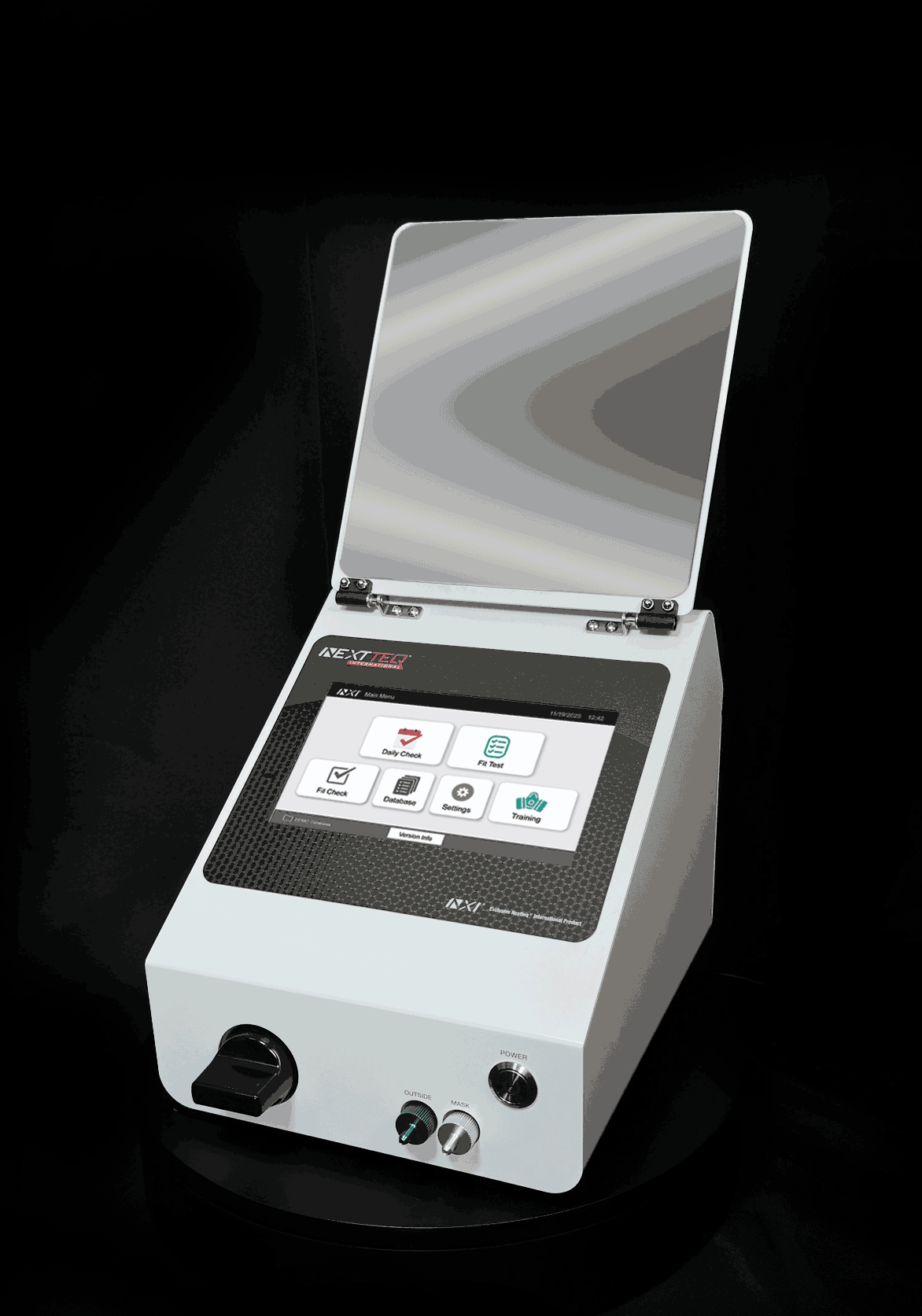
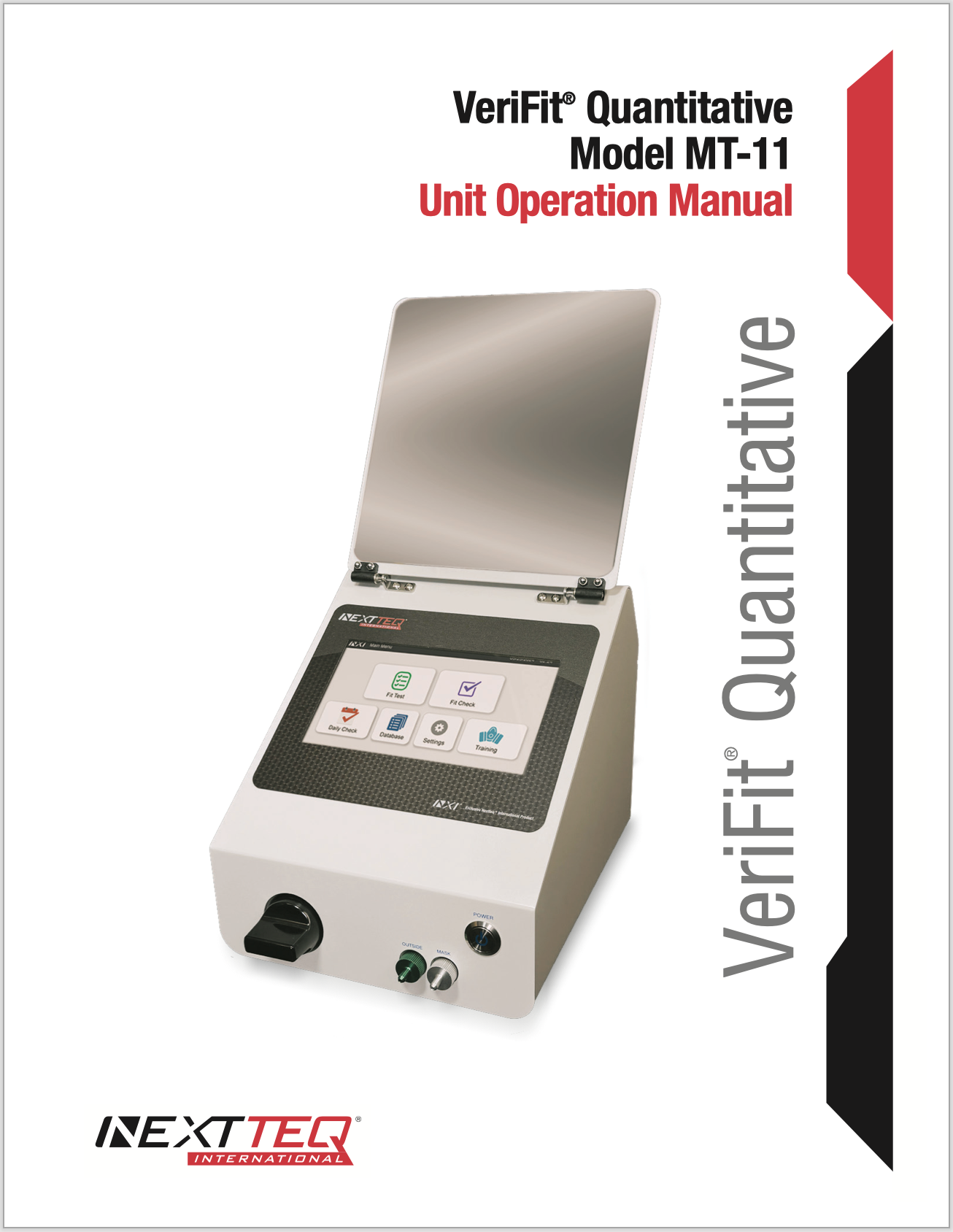
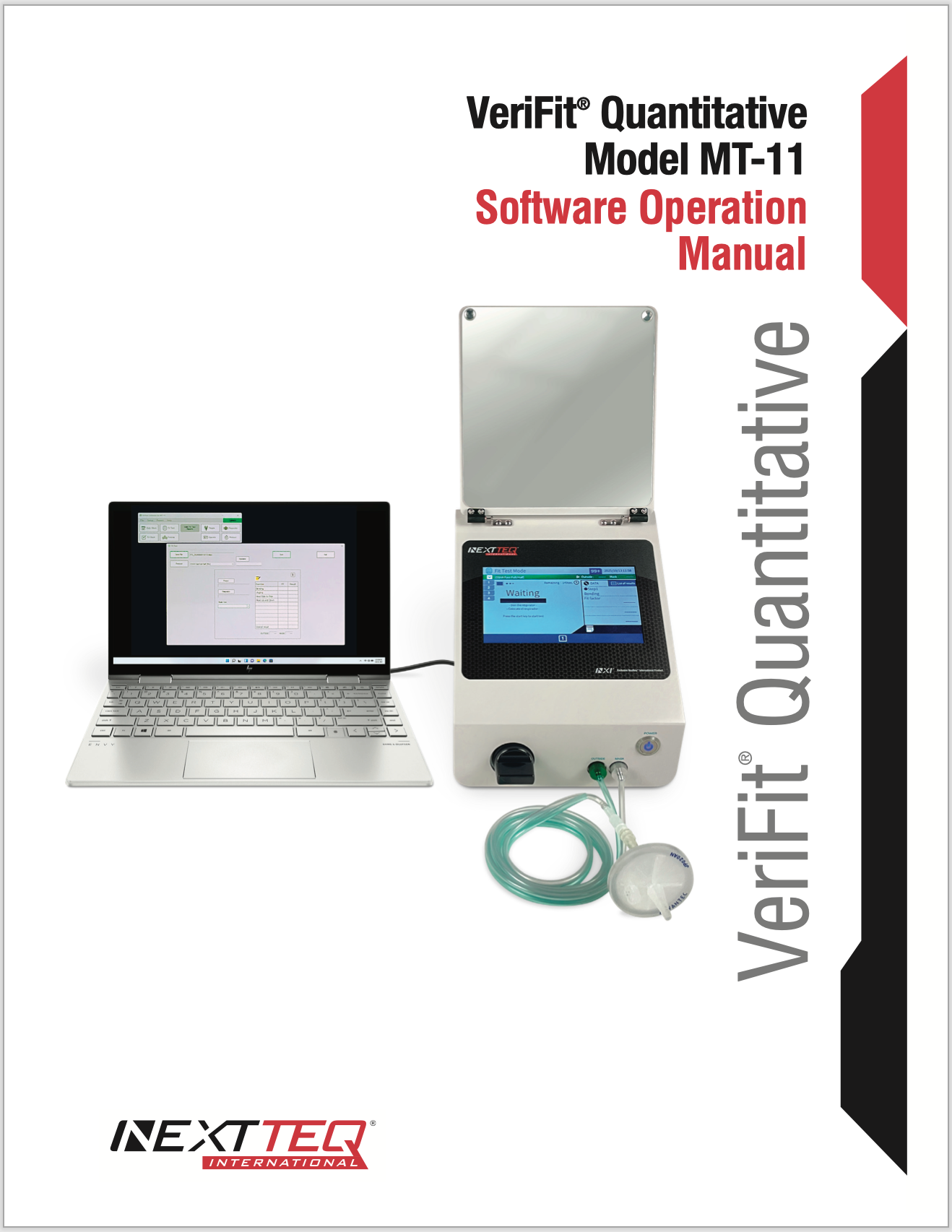
VeriFit® Quantitative MT-11
P/N NX90692
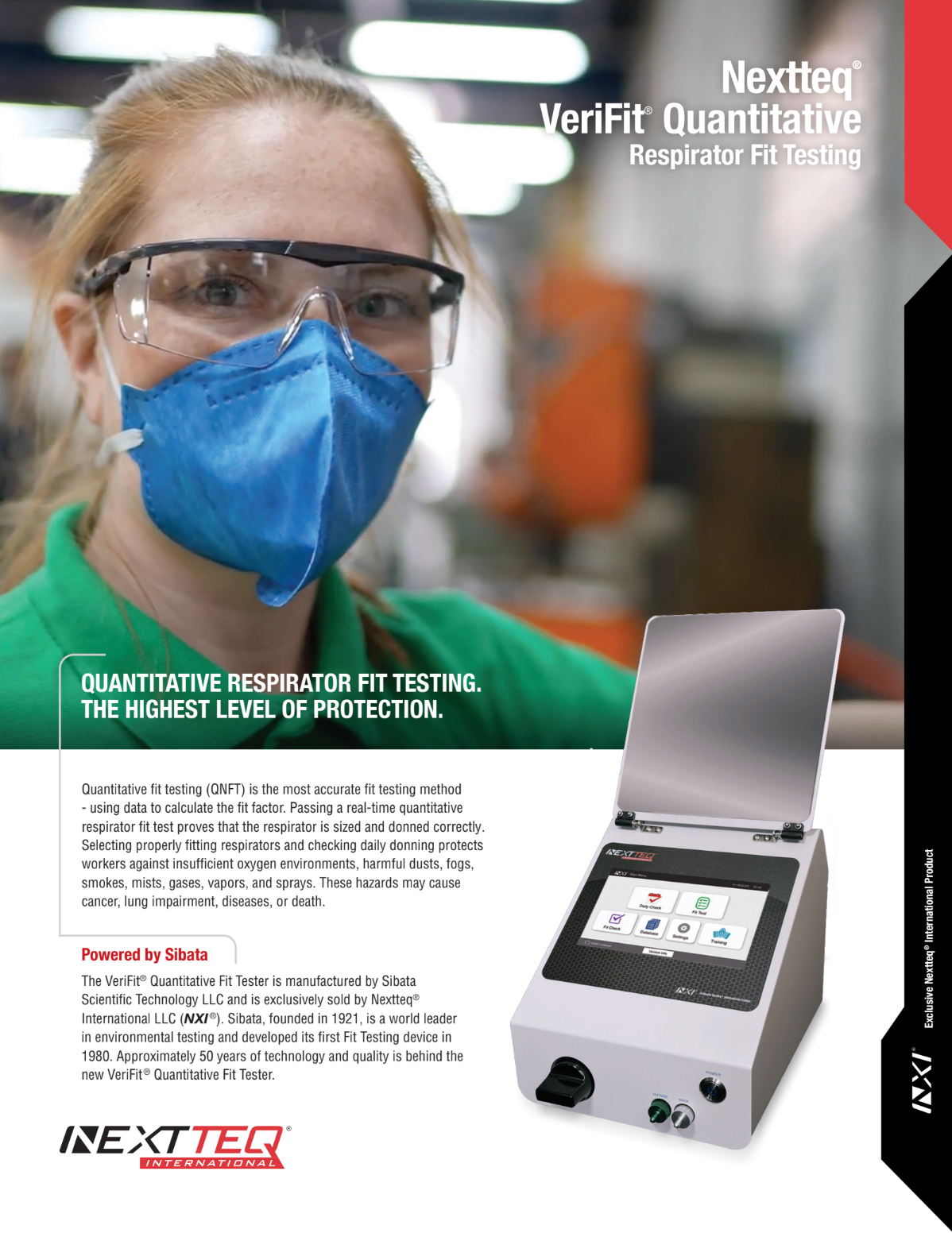
Quantitative Fit Testing (QNFT) is the most accurate fit testing method - using data to calculate the fit factor. Passing a real-time quantitative respirator fit test proves that the facepiece is sized and donned correctly. Selecting properly fitting respirators and checking daily donning protects workers against insufficient oxygen environments, harmful dusts, fogs, smokes, mists, gases, vapors, and sprays. These hazards may cause cancer, lung impairment, diseases, or death.
Q&A
> OSHA N95 Respirator Fit Testing Requirements and Guidelines
Respirator fit testing is a critical component of workplace safety across a wide range of industries. Fit testing verifies that a respirator properly seals to the user’s face prior to workplace use. By ensuring a tight seal, fit testing helps confirm that employees receive the intended level of respiratory protection.:
What are the OSHA Fit Testing Requirements?
Under OSHA regulation 29 CFR 1910.134, employees required to wear tight-fitting respirators, including N95 respirators, must undergo fit testing to ensure the respirator provides an adequate seal and the intended level of protection. Employers are responsible for ensuring compliance with the following requirements:
Initial Fit Testing
Employees must be fit tested before using an N95 respirator for the first time. The test verifies that the specific make, model, and size of the respirator fits the individual properly.
Annual Fit Testing
Fit testing must be repeated at least once every 12 months to confirm that the respirator continues to fit correctly and that no changes have occurred that could compromise the seal.
Change in Respirator
A new fit test is required whenever an employee switches to a different respirator make, model, size, or style.
Change in Employee Physical Condition
If an employee experiences a physical change that may affect respirator fit—such as significant weight change, dental work, facial surgery, or scarring—additional fit testing is required.
Medical Evaluation
Prior to fit testing or respirator use, employees must complete a medical evaluation to determine their ability to safely wear a respirator, as required by OSHA.
Written Respiratory Protection Program
Employers must develop and maintain a written, worksite-specific respiratory protection program addressing fit testing, respirator use, training, cleaning, maintenance, and recordkeeping. The program must be reviewed and updated as necessary.
Do N95's require fit testing?
Yes.
An N95 is a type of respirator. Specifically, it is a particulate filtering facepiece respirator that meets the National Institute for Occupational Safety and Health (NIOSH) N95 classification, meaning it filters at least 95 percent of airborne particles. N95 respirators are considered tight-fitting respirators; therefore, OSHA requires that they undergo fit testing prior to workplace use.
OSHA requires fit testing for N95 respirators before they are used in any occupational setting. Because N95 respirators rely on a tight seal to provide adequate protection, fit testing is necessary to verify that the respirator fits the user correctly. Without fit testing, there is no assurance that the respirator will perform as intended.
What is N95 fit testing?
According to OSHA regulation 29 CFR Part 1910.134 (Respiratory Protection), employers must establish and implement a written respiratory protection program whenever respirators are required to protect employee health. This program must include worksite-specific procedures and ensure that employees using tight-fitting facepiece respirators are fit tested prior to initial use, whenever a different respirator facepiece (size, style, model, or make) is used, and at least annually thereafter.
How is a respirator fit test performed?
Quantitative respirator fit testing is conducted using either Condensation Nuclei Counter (CNC) technology, such as the VeriFit® Quantitative MT-11 or Controlled Negative Pressure (CNP) technology. For N95 respirators, quantitative fit testing may only be performed using CNC technology.
When is a fit test required?
Any employee required to wear a tight-fitting facepiece respirator must be fit tested prior to initial use. Additional fit testing is required whenever a different respirator facepiece (size, style, model, or make) is used, and at least annually thereafter.
Who can perform respirator fit testing?
Respirator fit testing must be conducted by a qualified individual who is trained to follow OSHA-approved fit testing protocols and capable of instructing employees on proper respirator use.
Can N95 masks be reused?
N95 respirators are generally intended for single use and are typically disposed of after fit testing or use. However,some organizations may implement reuse protocols (e.g. during periods of supply shortages like during the COVID-19 pandemic). Employees should follow employer-specific procedures and guidance regarding N95 reuse.
How often is N95 fit testing required by OSHA?
OSHA requires fit testing whenever an employee is required to wear an N95 respirator as part of their job duties. Fit testing must be conducted prior to use and must correspond to the specific make, model, and size of the respirator. If a different respirator is introduced, a new fit test is required. After the initial fit test, employees must be retested annually to confirm continued proper fit.
> Facial Hair
What are the facial hair guidelines?
Fit Testing standards do not permit facial hair that interferes with the sealing surface of the respirator or interferes with the valve function of the respirator.
Why is facial hair a problem?
Facial hair can effect the sealing surface of a respirator. For the respirator to provide the assigned protection factor, the respirator must form a tight seal to the user's face. Facial hair can cause contaminants to leak into the mask.
Support Documents
Additional Support
For more information, contact Nextteq Customer Service Team at 813-249-5888 or toll free at 877-312-2333.
For technical questions, ask to speak to Dr. Duffy, VP of Technical Development / Industrial Hygiene Manager.